Report on the Residential Tourist Profile in Spain in 2025
Residential tourism in Spain has entered a new phase. At TM Real Estate Group, we observe that it is no longer limited to buyers seeking a second holiday home, but rather international profiles who choose Spain as a place to live, invest, and remain for a significant part of the year. Spain is thus consolidating its position as a European residential haven, and our 2025 data confirm a structural shift in the profile of the foreign buyer: higher budgets, greater use of the property, and a clear contribution to the deseasonalization of tourism.
“We are seeing that foreign buyers are no longer looking solely for a second residence for the summer, but for a home from which to organize their lives for much of the year. This has a direct impact on the local economy, employment, and the stability of the real estate market,” notes Pablo Serna, CEO of TM Real Estate Group.
Residential Tourist Profile: Sociological Data and Countries of Origin
Spain continuesto consolidate its position as a benchmark country for residential tourism, particularly within the European market. In 2025, clients from 36 countries invested in TM Real Estate Group residential tourism projects, reflecting the growing diversification and strength of international demand.
Spain leads the top 10 countries of origin, accounting for 29.8% of total sales (up from 17% in 2024), followed by Poland with 21.4% (30% in 2024), and Germany, which regains share to reach 8.2% (7.1% in 2024), surpassing Belgium, which moves to fourth place with 7.4% (8.9% in 2024). The ranking is completed by the Netherlands (6.8%), Ukraine (3.5%), the United Kingdom (3%), Romania (3%), Sweden (2.6%), and the Czech Republic (2.1%).
The average profile of the residential tourist investing in Spain is 51 years old, and 60% are married. Notably, the youngest buyers come from Georgia and Kuwait, with an average age of 33 and 35 respectively, while Lithuania and Iceland show the highest average ages, exceeding 60 years.
Locations and Housing Typology
The Costa Blanca continues to consolidate its position as one of the main residential hubs in southern Europe, thanks to its climate, connectivity, healthcare system, safety, international services, and a wide cultural and gastronomic offering—factors that are gaining importance amid scenarios of international uncertainty. Costa Blanca remains the preferred area for residential tourists, accounting for 52% of total sales, followed by the Costa de Almería (16%), the Costa de Valencia (12%), the Costa del Sol (10%), Mallorca (7%), and Murcia (3%).
The most in-demand property type among residential tourists is the apartment, representing 64% of total demand, with an average size of 117 square meters and two bedrooms (48%). Buyers from Iceland and Canada are the clients who demand the largest living spaces.
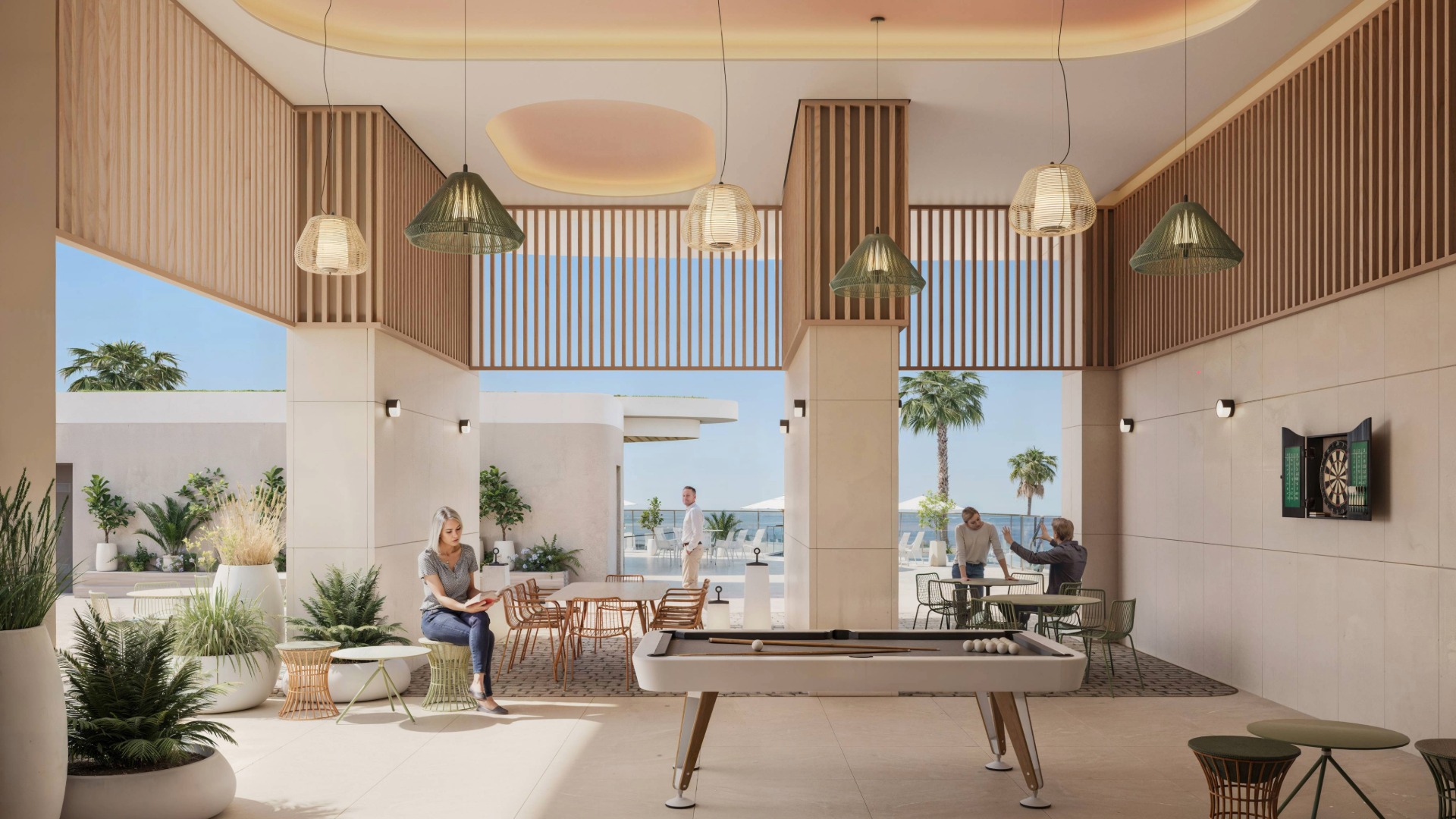
Demand for one-bedroom homes represents 9% in 2025. This housing typology is typically sought after by younger, single, and remote-working clients. In this regard, TM offers solutions tailored to client needs, such as the incorporation of coworking spaces within residential developments. This approach is already being implemented in flagship projects such as TM Tower, the tallest residential building in Europe, as well as Sunset Sailors in Benidorm, Santa María Sea by TM in Valencia, and Marine Hills by TM on the Costa del Sol.
Average Budget and Financing
International buyers are prioritizing quality, location, services, and sustainability, accepting a higher average ticket in exchange for better-designed, more efficient homes tailored to long stays.
The average budget in 2025 stands at 560,000€, representing a 22.5% increase compared to 2024. This increase by country is particularly notable among Polish buyers, with an average budget of 685,000€ (+48% vs. 2024), and German buyers, with an average budget of 577,000€ (+25% vs. 2024).
The high solvency of foreign buyers is one of the most significant characteristics of today’s residential tourism: 85% of transactions are completed without bank financing, reflecting a buyer profile with limited exposure to interest rate cycles. This profile strengthens the resilience of Spain’s residential tourism market in the face of economic or financial uncertainty.
Purchasing Behavior
Two out of every ten sales are completed through the company’s online channels, demonstrating the growing importance of digitalization and the international buyer’s confidence in remote purchasing processes.
Residential Tourism Drives Deseasonalization
Residential tourism acts as an economic stabilizer for the territory, smoothing demand peaks and generating sustained activity throughout the year. In addition, it is evolving toward hybrid residential models, midway between primary residence and second home, driven by remote work, active aging, and international mobility.
More than 42% of buyers reside in their property for over four months a year, and nearly 30% consider it their primary or future primary residence.
In 2025, year-round property usage has become consolidated across all months, with an average occupancy rate of 73% (69% in 2024) from January to December, thereby reducing summer peaks. This figure exceeds 80% when excluding the months of December and January.